

There’s a point on every project where time stops behaving like time and starts behaving like a mood. The programme says one thing, the model says another, and somewhere in between someone decides the solution is to add more people.
That’s usually when the old line about babies and pregnancy pops into my head.
You can’t get a baby born in one month by getting nine women pregnant.
Crude? Maybe. Accurate? Absolutely.
Everyone knows it. Everyone agrees with it. And everyone ignores it the moment a BIM deadline starts flashing red.
The Friday Afternoon “Resourcing” Email
It always arrives late on a Friday, just when you’re mentally halfway out the door. A calendar invite. A subject line about a “final push”. A handful of new names copied in for good measure.
On paper, it looks decisive. In reality, it’s the beginning of controlled chaos. Because BIM isn’t something you parachute into. Models have memory. Decisions buried in them that only make sense if you were there when they were made.
By the time the reinforcements arrive, the people who actually understand the model are already stretched. Every question becomes an interruption. Every interruption slows the very thing you’re trying to speed up.
BIM Has a Sequence, Whether You Like It or Not
BIM work has an order to it. Setup before coordination. Coordination before drawings. Drawings before issue. You can overlap a bit if you’re careful, but you can’t skip steps without paying for it later.
Throwing more people at the problem doesn’t compress that sequence. It just adds more joins. More handovers. More places where intent can leak out unnoticed. The model might look busy, but busy isn’t the same as moving forward.
When “Helpful” Becomes Harmful
The uncomfortable truth is that extra help often creates extra noise. New people don’t know which walls are provisional, which dimensions are politically sensitive, or which compromises were made because there simply wasn’t time to do it properly.
So they tidy things up. Or rationalise. Or “just quickly fix” something that looked odd in isolation. No malice. No incompetence. Just missing context. And context is the one thing you never have time to explain properly at the eleventh hour.
BIM Is Not Interchangeable Labour
This is the lie architecture still tells itself when deadlines loom. That BIM is a production line and people are interchangeable parts. That if one person can model, five people can model faster.
But BIM isn’t typing. It’s judgement. It’s knowing when a shortcut is safe and when it’s going to explode in coordination three weeks later. That knowledge lives in people’s heads, not in the model, and certainly not in a programme spreadsheet.
When you flood a model with new hands, accountability blurs just when it needs to sharpen.
The Jobs That Don’t End in Burnout
The calmer jobs don’t look heroic. They look boring. Fewer people in the model. Clear ownership. Decisions made early and defended later. An adult acceptance that some things won’t be perfect by issue — and a conscious choice about which imperfections you can live with.
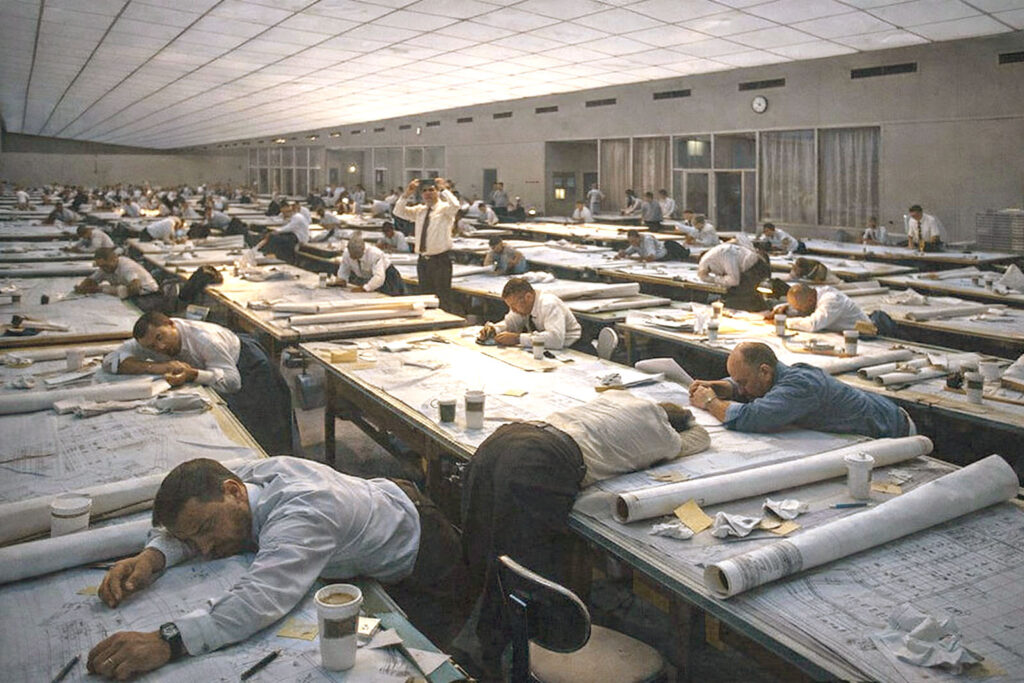
No midnight miracles. No dramatic saves. Just fewer people asleep at their desks while a plotter hums in the background.
The Bit Everyone Knows but No One Says
If your delivery strategy relies on goodwill, caffeine, and people staying later than they should, it isn’t a strategy. It’s a hope.
BIM doesn’t bend to urgency. It doesn’t compress because the calendar says it should. It just reflects, with uncomfortable clarity, the decisions you made weeks ago.
You can’t rush a baby.
You can’t brute-force coordination.
And you can’t fix a structural resourcing problem at the deadline by throwing more people at a model.
Some things take the time they take. And on Monday morning, the model will remember exactly how you treated it on Friday night.