

Who Actually Runs Your Country Matters More Than Your Software
There’s a question we rarely ask in architecture or BIM circles, but it explains far more than most maturity models ever will: who runs your country?
Not politically, in party terms — but professionally. Are positions of power dominated by lawyers, by engineers, or by career bureaucrats? Because whichever group shapes the political class also sets the cultural defaults for how risk, responsibility, and coordination are handled across society.
BIM culture doesn’t sit in isolation. It’s downstream of this. It inherits the instincts of the system it operates inside.
Once you look at BIM through that lens, a lot of otherwise baffling behaviour suddenly makes sense.
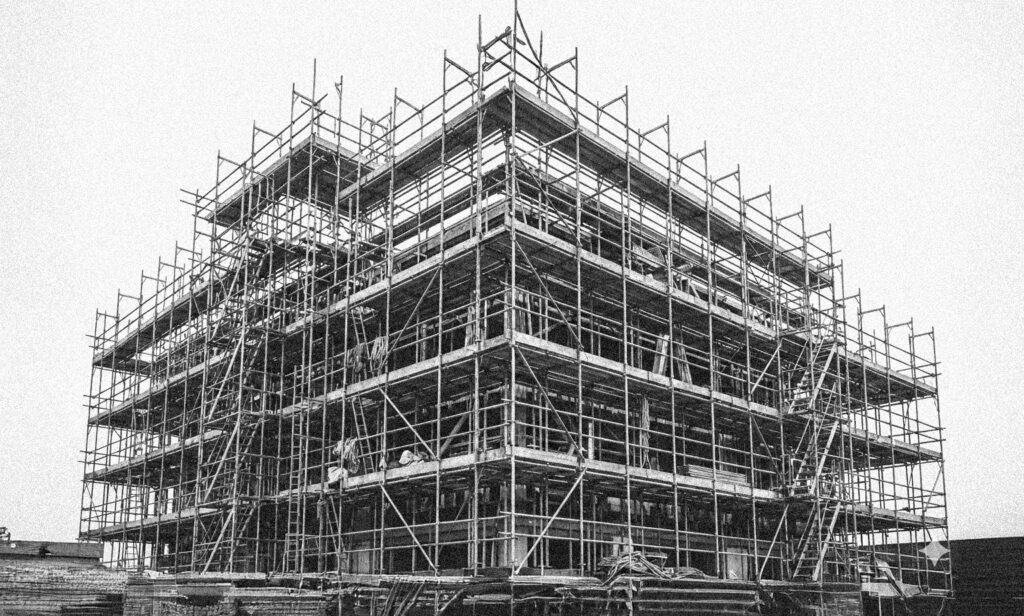
The Anglo-American Pattern: When Lawyers Shape Reality
In the US and the UK, political power has long been overrepresented by people trained in law, policy, and advocacy. Even where the raw percentages differ, the underlying mindset is similar: reality is something to be negotiated, contested, and defended against.
In this worldview, trust is not assumed. It must be demonstrated, documented, insured, and contractually bounded. Coordination becomes expensive not because people can’t work together, but because every interface between organisations is a potential dispute. Change is costly because it reopens questions of liability. Performance isn’t just delivered; it has to be proven.
Architecture and construction absorb this logic wholesale. Emails are written for the record. Meetings are structured around responsibility. Documentation becomes armour. And BIM, inevitably, is treated less as a design environment and more as a potential liability artefact.
This is how BIM drifts from coordination tool to evidence infrastructure. Models become something to be issued carefully, caveated heavily, and surrounded by disclaimers. BEPs grow longer not because complexity demands it, but because fear does.
Technocratic Counterpoints: France and China
Contrast this with technocratic systems.
In France, political and administrative power flows through elite engineering and technical schools. The state sees the world as a set of systems to be structured, optimised, and harmonised. BIM fits naturally into this worldview. It becomes part of national infrastructure: classification, information requirements, interoperability, process coherence. The anxiety isn’t “who owns the model?” but “how does this integrate?”
China takes this even further. Engineering and STEM backgrounds are not incidental; they are political currency. BIM there is not a negotiation space but a production platform. It’s expected to link design, cost, time, fabrication, and operation. The instinct is not to argue about risk but to absorb it through scale, standardisation, and system design.
In these cultures, BIM is not primarily about proof. It’s about performance.
Germany: Rules, Consensus, and Administered BIM
Germany sits between these worlds. It combines engineer-dominated industry with lawyer- and administrator-led government. The result is a culture built on rules, standards, and consensus.
Here, BIM becomes something to be administered. Not weaponised defensively, not aggressively industrialised, but regulated into coherence. Standards bodies, norms, and procedures take centre stage. BIM progresses methodically, slowly, and with a strong preference for alignment over improvisation.
It’s neither trust-based nor distrust-based. It’s procedure-based.
When Trust Becomes Expensive, Engineers Do What Engineers Do
This is where the recent “trust tax” framing from UK discourse becomes interesting.
The diagnosis is sharp: AEC isn’t burdened because it’s fragmented; it’s burdened because coordination is expensive. And coordination is expensive because trust is expensive. Every project requires new coalitions, new proofs of competence, new demonstrations of performance, and new mechanisms for settling disputes.
That diagnosis is entirely consistent with a lawyer-shaped environment.
But the proposed response — an “Agreement Engine”, protocol-to-code pipelines, auditable proof triggering automation — is pure engineering instinct.
This is the key insight: engineers are trained to engineer around reality, not argue with it.
If reality is adversarial, engineers won’t moralise about trust. They will build systems that assume low trust and make it cheaper. They will translate ambiguity into protocol, protocol into code, and code into enforcement. They will not try to fix culture directly; they will try to amortise its cost.
In that sense, these proposals are not revolutionary. They are entirely predictable responses to a UK-specific condition: a high-liability, low-trust environment where coordination pain has become intolerable.
BIM’s Quiet Evolution into a Trust Broker
Seen this way, BIM’s trajectory in the UK starts to look different.
BIM is no longer just a modelling environment or even a coordination tool. It is slowly becoming a substrate for commitments, proof, and settlement. Models, issue logs, approvals, and CDE metadata form the evidentiary layer upon which trust is rationed.
The idea of “no receipt, no settlement” isn’t foreign to BIM managers. It’s already how many projects function — just inefficiently, manually, and inconsistently. What’s being proposed is not a new mindset, but a formalisation of existing behaviour.
This is BIM as trust infrastructure.
Not because the industry wants it that way, but because the cultural operating system demands it.
The Deeper Tension: Engineering Around Reality vs Changing It
There is, however, a quiet tension running through all of this.
Engineering around low trust is pragmatic. It reduces friction. It makes coordination survivable. But it also risks freezing the underlying condition in place. Once trust is fully instrumented, there is little incentive to rebuild it culturally.
In technocratic systems, BIM is used to improve outcomes.
In legalistic systems, BIM is used to survive outcomes.
Both are rational. Neither is neutral.
The question is not whether Agreement Engines or trust infrastructures are “good” or “bad”. The question is what kind of industry they entrench — and whether they are a stepping stone to something healthier, or a permanent adaptation to dysfunction.
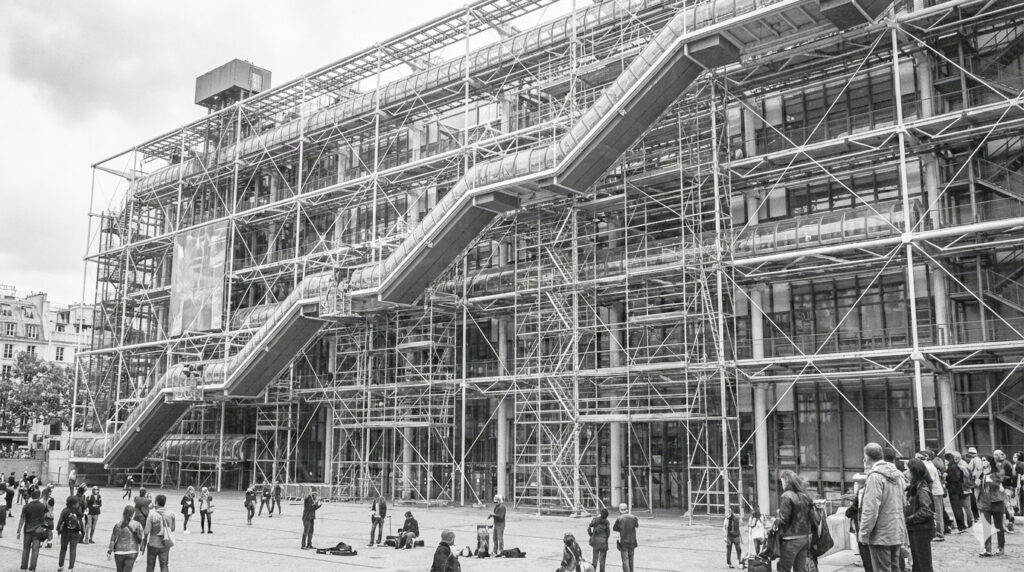
When trust is expensive, you don’t hide the infrastructure. You bolt it to the façade.
What This Means for BIM Managers
For BIM managers, this reframes the job entirely.
You are not just managing models, standards, or workflows. You are mediating between cultural assumptions about trust, risk, and responsibility. The same technical solution will be welcomed as optimisation in one context and feared as exposure in another.
Success depends less on technical elegance than on cultural translation: knowing when to speak the language of risk reduction, when to speak the language of system performance, and when to lean into procedure.
And increasingly, knowing when you are being asked to engineer around reality rather than challenge it.
Conclusion: BIM Reflects the Culture Using It
BIM is not broken. It is adaptive.
In lawyer-shaped cultures, it becomes evidence.
In engineer-shaped cultures, it becomes infrastructure.
In bureaucratic cultures, it becomes procedure.
And in places where trust has become too expensive to carry by hand, BIM quietly starts to become something else entirely: a machine for making coordination tolerable.
Once you see that, the current debates stop feeling confusing. They start feeling inevitable.