

There’s a story — half psychology experiment, half office folklore — about five monkeys in a cage.
In the middle of the cage is a ladder. At the top of the ladder: bananas. One monkey climbs the ladder to get them. As soon as he does, the experimenters spray all the monkeys with cold water.
It doesn’t take long for the group to learn the lesson. Every time a monkey tries to climb the ladder, the others pull him down. Eventually, no one goes near it.
Then the experimenters start replacing the monkeys, one by one. A new monkey arrives, sees the bananas, and heads for the ladder — only to be dragged down by the others. He doesn’t know why. They don’t explain. They just enforce the rule.
Over time, every original monkey is replaced. None of the current monkeys has ever been sprayed with cold water.
Still, if one of them approaches the ladder, the rest pull him down.
Why?
Because that’s how things are done.
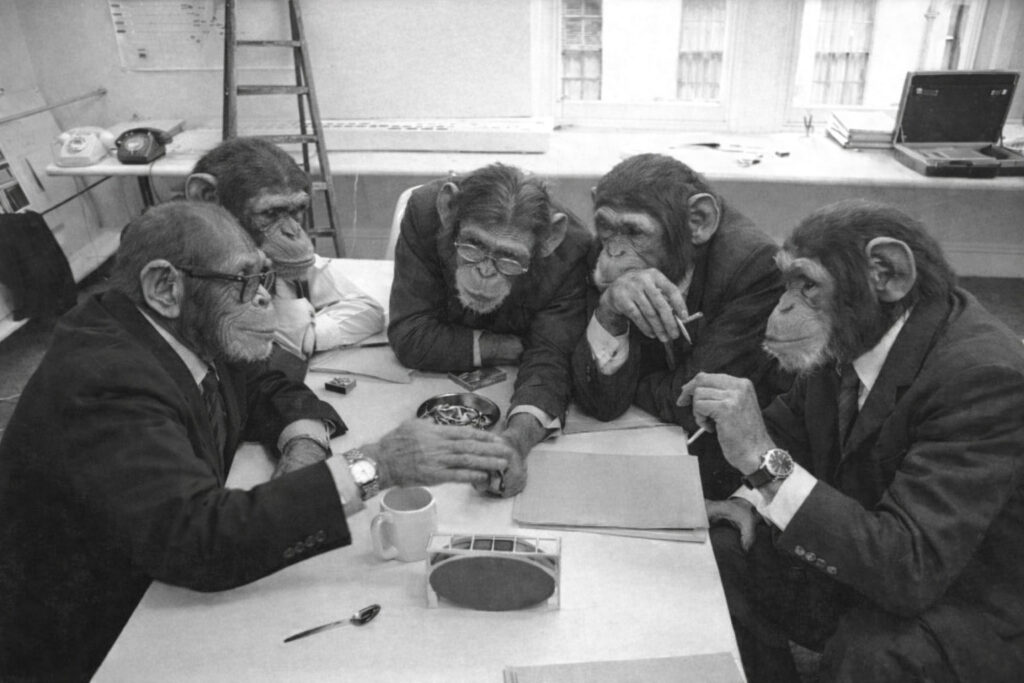
Revit Enters the Cage
If you’ve worked in an architectural practice long enough, you’ve seen this dynamic play out — just with fewer bananas and more central models.
Somewhere in the office’s past, a Revit rule was born.
Maybe it was genuinely necessary at the time. Maybe the model crashed spectacularly. Maybe someone lost a weekend to a corrupted file or a coordination issue slipped through at the worst possible moment.
The reason doesn’t matter anymore. The rule survived. The context didn’t.
So now you hear things like:
“Don’t touch that workset.”
“We don’t rename views.”
“Don’t use model groups.”
“We tried Dynamo once. Never again.”
Not because anyone can clearly explain the risk — but because someone once got sprayed.
And just like the monkeys, the team enforces the rule on itself.
How Habits Outlive Problems
This is how Revit models quietly turn into museums of past fears.
Workflows designed for 5 Revit versions back that no one remembers.
Complex families built to avoid issues that no longer exist.
Manual processes defended as if automation were inherently dangerous.
The model still works — technically. But it’s heavier, slower, and more fragile than it needs to be.
Not because Revit demands it. Because office culture does.
Culture eats software for breakfast.
The Quiet Death of Curiosity
You can usually spot the moment this culture reproduces itself.
A new joiner arrives. Curious. Confident. Slightly annoying in the right way.
“Why don’t we automate this?”
“Couldn’t this be a parameter?”
“Is there a reason this is manual?”
At first they’re indulged. Then gently discouraged. Eventually, corrected.
Not loudly. Not formally. Just enough eye-rolling and “we don’t do that here” to teach the lesson.
The cold water isn’t crashes anymore. It’s social.
And once that lesson is learned, they start pulling the next person off the ladder too.
Breaking the Pattern (Carefully)
This isn’t about ripping up standards or letting everyone do whatever they like.
It’s about asking one uncomfortable question more often:
Why does this rule exist?
Some things are still risky. Fine. Say so.
Some things used to be risky. Test them again.
Some things were never risky — just unfamiliar.
If your Revit standards can’t explain themselves, they’re not standards — they’re folklore. Passed down, repeated, and defended long after their original purpose has been forgotten.
The Ladder Is Still There
The bananas are still there too.
But unless someone is allowed to climb — and explain what happens when they do — the team will keep pulling each other down.
Not because they’re malicious.
Not because they’re incompetent.
But because no one remembers who turned on the cold water.
Secret BIM Manager takeaway:
If your BIM culture relies on memory instead of intent, you’re not managing risk — you’re preserving fear.